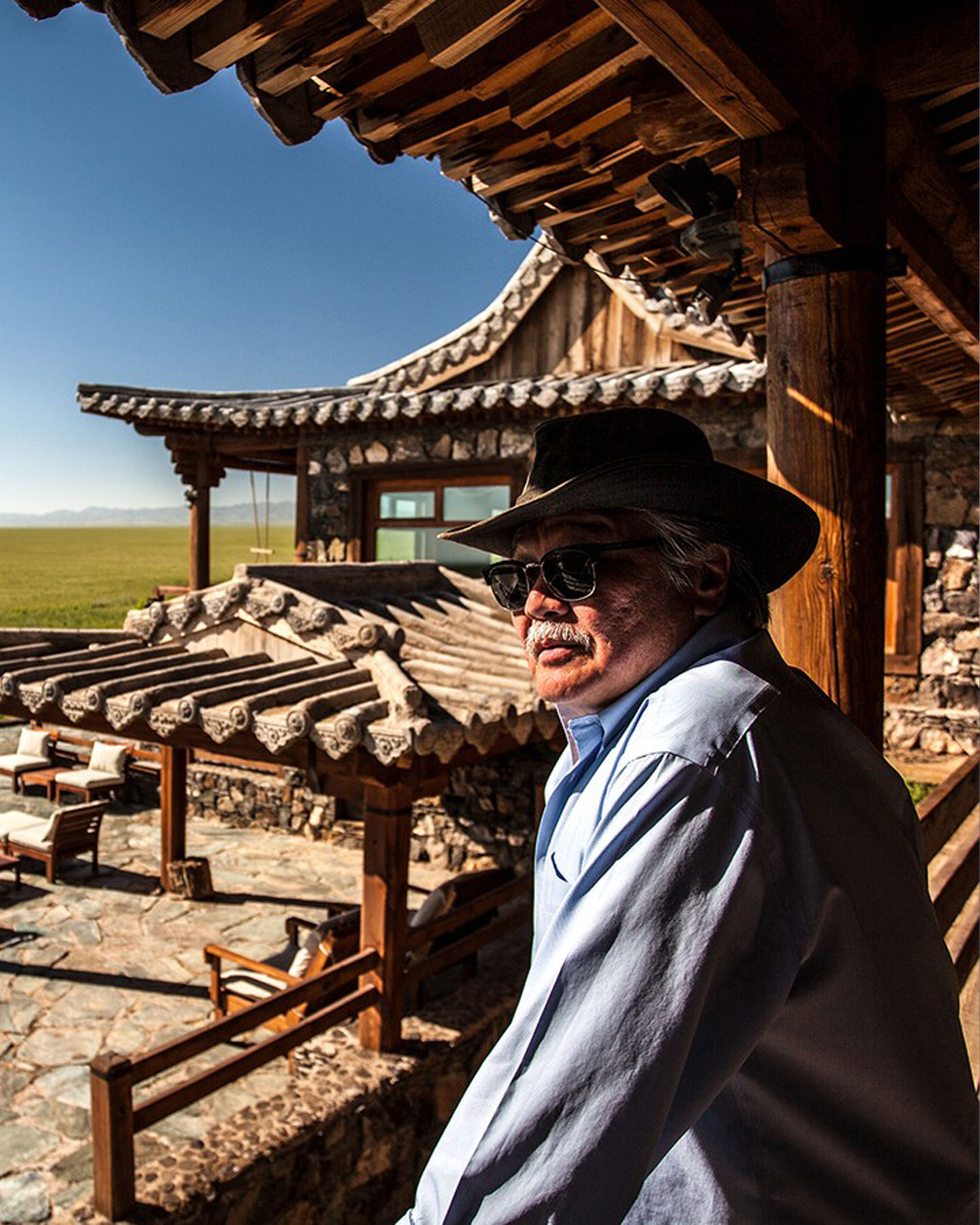
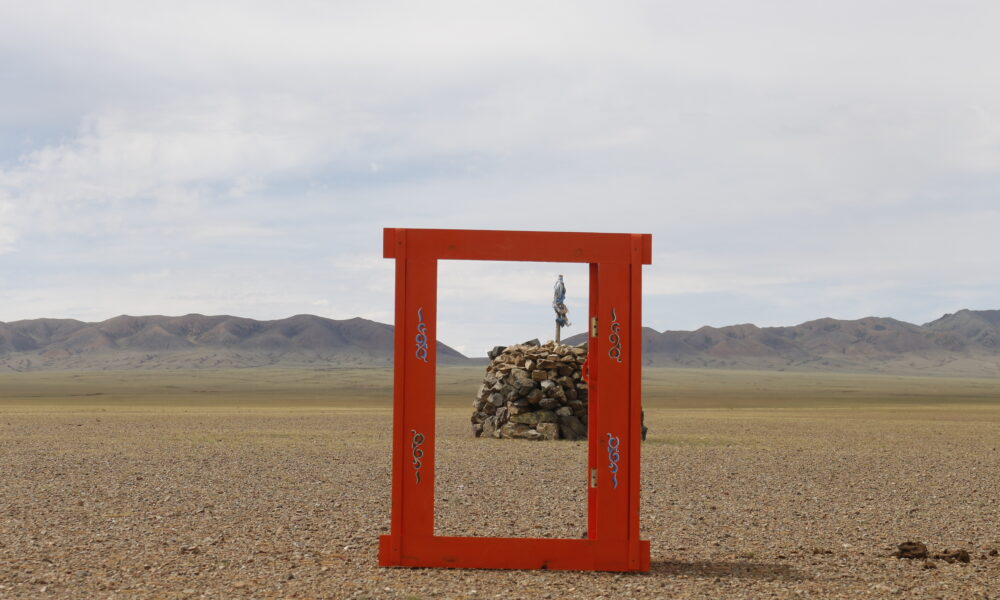
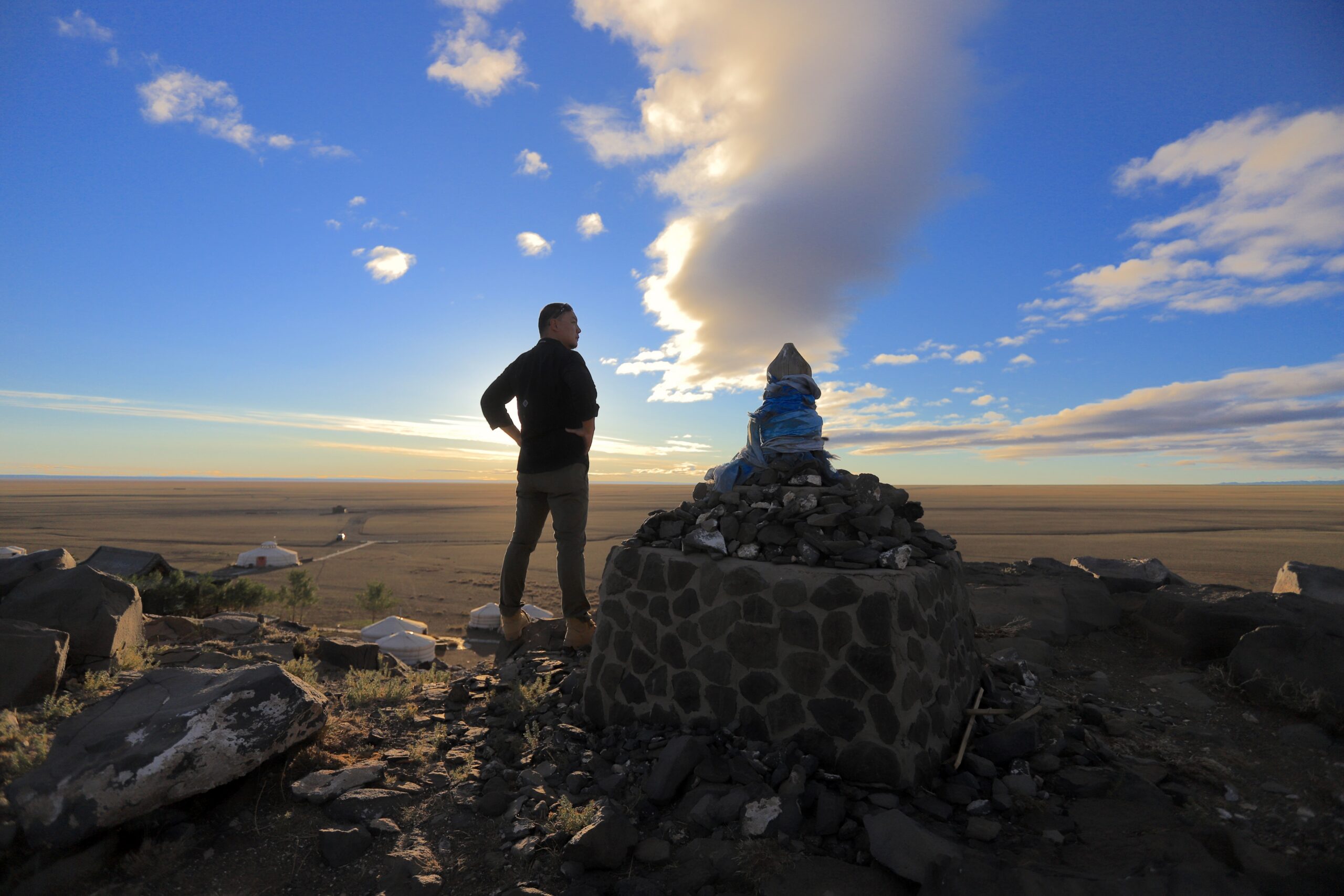
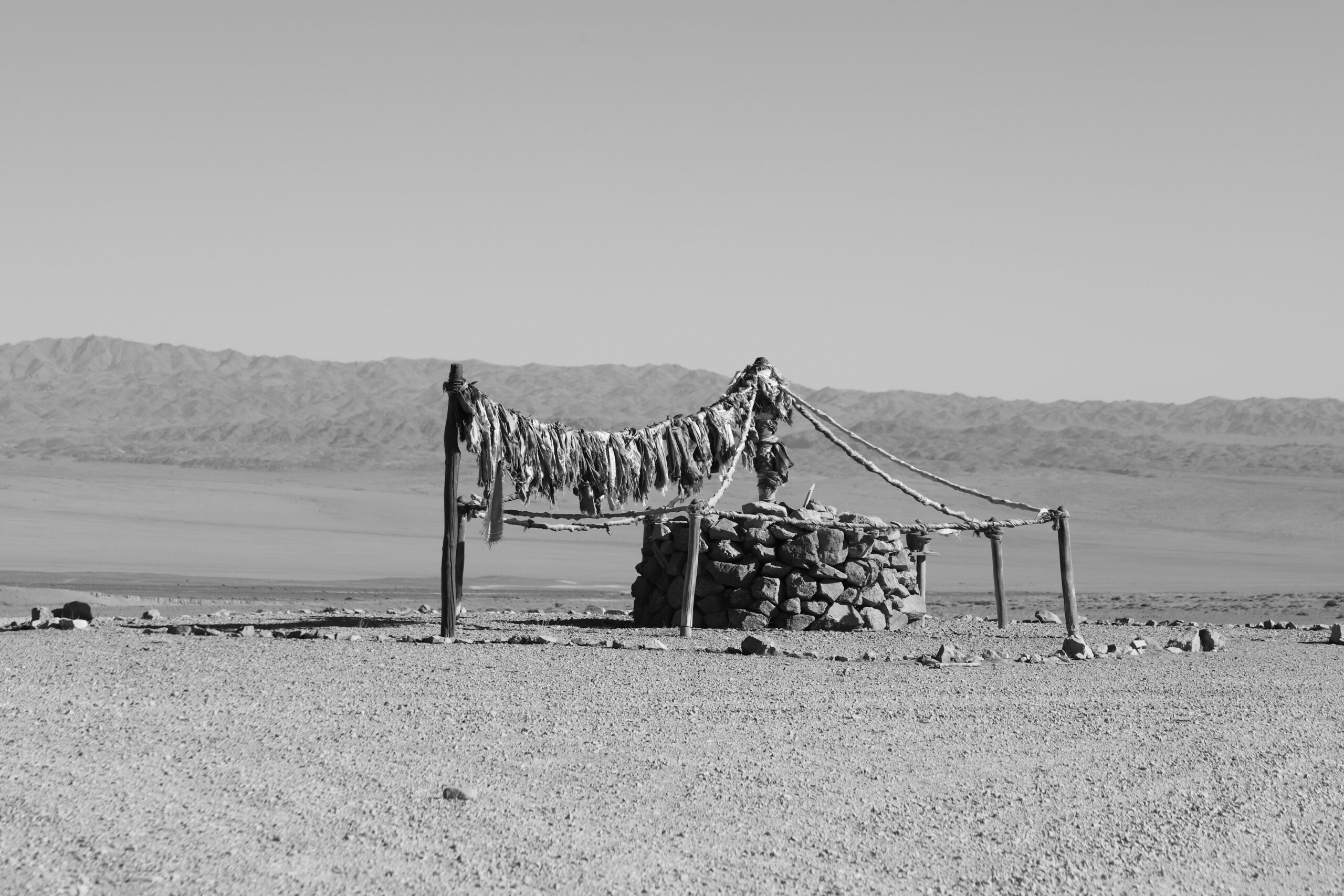
A hike into the hills above Three Camel Lodge leads to one of the most enduring features of Mongolia’s cultural landscape. At the top stands an ovoo, a cairn of stones overlooking the Lodge and the open country beyond it. Similar structures appear throughout Mongolia, on mountain passes and hilltops, beside roads and in valleys, marking places that have held significance for local communities across generations.
Guests at Three Camel Lodge may encounter several during their time in the South Gobi. In addition to the ovoo above the Lodge, another stands along a hike through a nearby valley. An excursion into Yol Valley offers another encounter within the Gobi Gurvan Saikhan mountains. Each provides an opportunity to understand a tradition closely connected to Mongolia’s pastoral history and its relationship with the natural world.
Where to See Ovoos Near Three Camel Lodge
| Ovoo | How to Reach It | Setting | Best For |
|---|---|---|---|
| Hill above the Lodge | On foot from the Lodge, 10-minute hike | Hilltop overlooking the Lodge and open desert | Sunrise or sunset walks, first-day orientation |
| Nearby valley | Guided valley hike from the Lodge | Valley route through the surrounding hills | Guests who want a longer walk with cultural context |
| Yol Valley (Yolyn Am) | Excursion by vehicle into Gobi Gurvan Saikhan National Park | Narrow mountain gorge, cooler and higher than the desert floor | Full-day excursions combining landscape and culture |
What Is an Ovoo? The Meaning Behind Mongolia’s Sacred Cairns
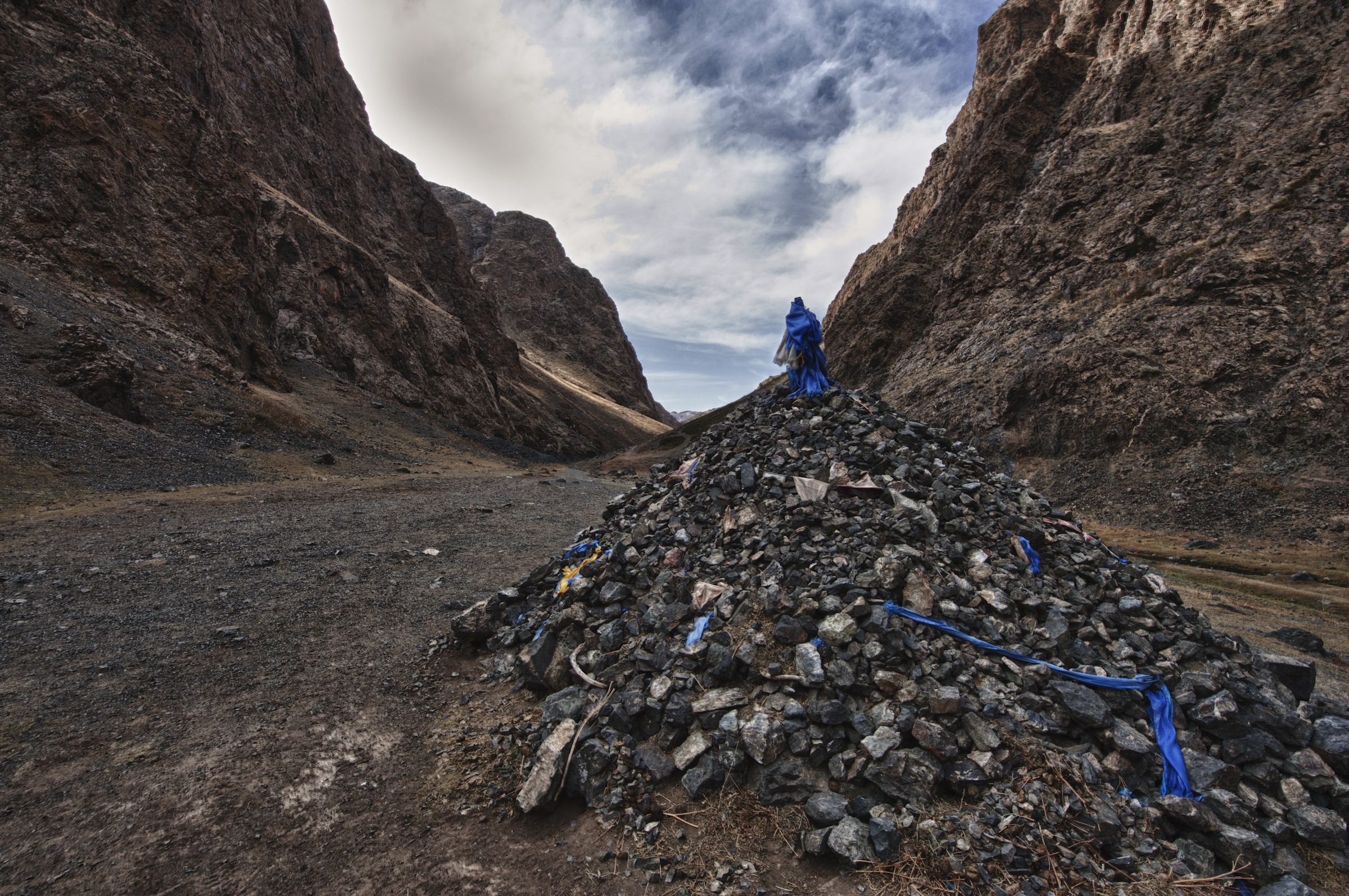
The Mongolian word ovoo refers literally to a “heap” or “pile.” Their appearance varies considerably. Some are relatively simple collections of stones, while others incorporate branches, poles, prayer flags, or khadag, ceremonial scarves often seen at sacred places.
Their significance is more complex than their construction suggests. Research published in the Oxford Research Encyclopedia of Asian History describes ovoos as both ritual altars and territorial markers associated with particular landscapes and communities. Some are connected to mountains or other sacred places where local people gather for ceremonies, make offerings, and seek protection or prosperity.
Ovoos are closely connected with Mongolia’s traditional practices of worshipping sacred sites, which UNESCO inscribed on the List of Intangible Cultural Heritage in Need of Urgent Safeguarding in 2017. UNESCO describes these traditions as having developed within Mongolia’s nomadic culture, where livelihoods have long depended on close relationships with land, water, weather, and pasture.
Within these traditions, mountains, rivers, springs, and other natural places may hold spiritual significance. Ovoos provide a physical place where people can acknowledge those relationships through ceremonies and offerings.
A Tradition Shaped by Mongolia’s History
Sacred-site worship in Mongolia has changed considerably over time. Earlier beliefs associated with shamanic traditions understood elements of the natural world as connected with spiritual beings. As Buddhism spread through Mongolia, Buddhist practices became incorporated into existing forms of worship.
At some sacred sites today, Buddhist monks participate in ceremonies and recite sutras. Other customs retain connections with older forms of mountain and nature worship. Practices also differ by region and community, which is important when considering the many ovoos found across a country of Mongolia’s size.
The twentieth century brought a major interruption. Religious practices were suppressed during Mongolia’s socialist period, when monasteries were destroyed and public expressions of religion were restricted. Research on ovoo traditions documents the prohibition of ovoo worship during communist rule.
Following Mongolia’s democratic transition beginning in 1990, sacred-site worship experienced a revival. Ceremonies returned to many places, and efforts began to document traditions that had survived decades of restriction. UNESCO’s safeguarding work has since included documenting sacred sites and practitioners while supporting the transmission of associated knowledge to younger generations.
Ovoos therefore belong as much to contemporary Mongolia as to its history. Many continue to be visited and maintained by the communities connected with them.
Ovoos of the South Gobi
The South Gobi provides a distinctive setting for these sites. Broad plains meet mountain ranges, while passes and valleys have long provided routes through the region. Ovoos positioned on high ground can be visible from considerable distances.
The ovoo above Three Camel Lodge is reached on foot from the property. From its position in the hills, guests can look back toward the Lodge below and across the surrounding desert. Another ovoo can be encountered on a hike through a nearby valley, giving guests two opportunities to see these sacred sites within the immediate surroundings of the Lodge.
Farther away, guests traveling from Three Camel Lodge to Yol Valley may encounter another ovoo within the Gobi Gurvan Saikhan mountains. Yol Valley, also known as Yolyn Am, cuts through a narrow gorge where the higher elevation creates conditions markedly different from the surrounding desert. The presence of an ovoo here offers another example of the tradition within a landscape guests experience during their stay.
Visiting an Ovoo
Visitors to Mongolia are often told that the customary practice at an ovoo is to walk around it clockwise three times and add a stone. While this is a familiar practice at many sites, it should not be treated as a universal set of instructions.
UNESCO’s documentation of Mongolian sacred-site traditions notes differences in ceremonies and customs among communities. Formal worship can involve offerings and prayers, and some ceremonies are led by Buddhist monks or local elders. The meaning and appropriate practices associated with an individual ovoo depend on its location and community.
When guests encounter an ovoo during a hike or excursion from Three Camel Lodge, our guides can provide context for the particular site and explain how to approach it respectfully. This local knowledge is especially valuable because the physical structure alone cannot explain the history or customs associated with it.
Cultural Knowledge in the Gobi
Understanding Mongolia requires looking beyond the places that appear on a map. Pastoral life has developed through generations of knowledge about water sources, seasonal conditions, grazing land, and routes across difficult terrain. Religious and cultural traditions developed within that same environment.
Ovoos are one expression of this relationship. They show how particular mountains, valleys, and passes have acquired meaning through continued human use and belief. Their survival also reflects the return of religious and cultural practices that endured a difficult period in Mongolia’s recent history.
For Three Camel Lodge, these traditions are part of the place in which we operate. Guests do not need to travel far to encounter them. An ovoo stands in the hills above the Lodge, another along a nearby valley hike, and others appear during excursions farther into the South Gobi.
Spending time with our Mongolian guides provides the context necessary to understand what these structures represent. An ovoo encountered on a hike may be physically modest, but its history connects the immediate landscape with traditions practiced across Mongolia for centuries.
Frequently Asked Questions About Mongolian Ovoos
What does ovoo mean?
Ovoo is the Mongolian word for “heap” or “pile.” It refers to a sacred cairn of stones, often decorated with branches, prayer flags, or blue khadag scarves, found on hilltops, passes, and roadsides across Mongolia.
Why do people walk around an ovoo three times?
Walking clockwise around an ovoo three times and adding a stone is a common practice at many sites. Customs differ between communities, though, so it’s best to ask a local guide how a particular ovoo is approached.
Can tourists add a stone to an ovoo?
At many ovoos, visitors are welcome to take part respectfully. Because practices vary by site, follow your guide’s lead and never remove stones or offerings that are already there.
Are ovoos religious sites?
Yes. Ovoos are tied to Mongolia’s tradition of worshipping sacred sites, which blends older shamanic beliefs with Buddhism. UNESCO recognized these practices as Intangible Cultural Heritage in Need of Urgent Safeguarding in 2017.
Where can I see an ovoo in the Gobi Desert? Guests at Three Camel Lodge can hike to an ovoo on the hill above the Lodge and another along a nearby valley. A third stands in Yol Valley (Yolyn Am) in Gobi Gurvan Saikhan National Park.
Ready to Explore the Sacred Landscapes of the Gobi?
Hike to the ovoo above the Lodge, explore Yol Valley with our guides, and experience Mongolian culture up close on a 3-night or 4-night Lodge stay. Book your Gobi journey.