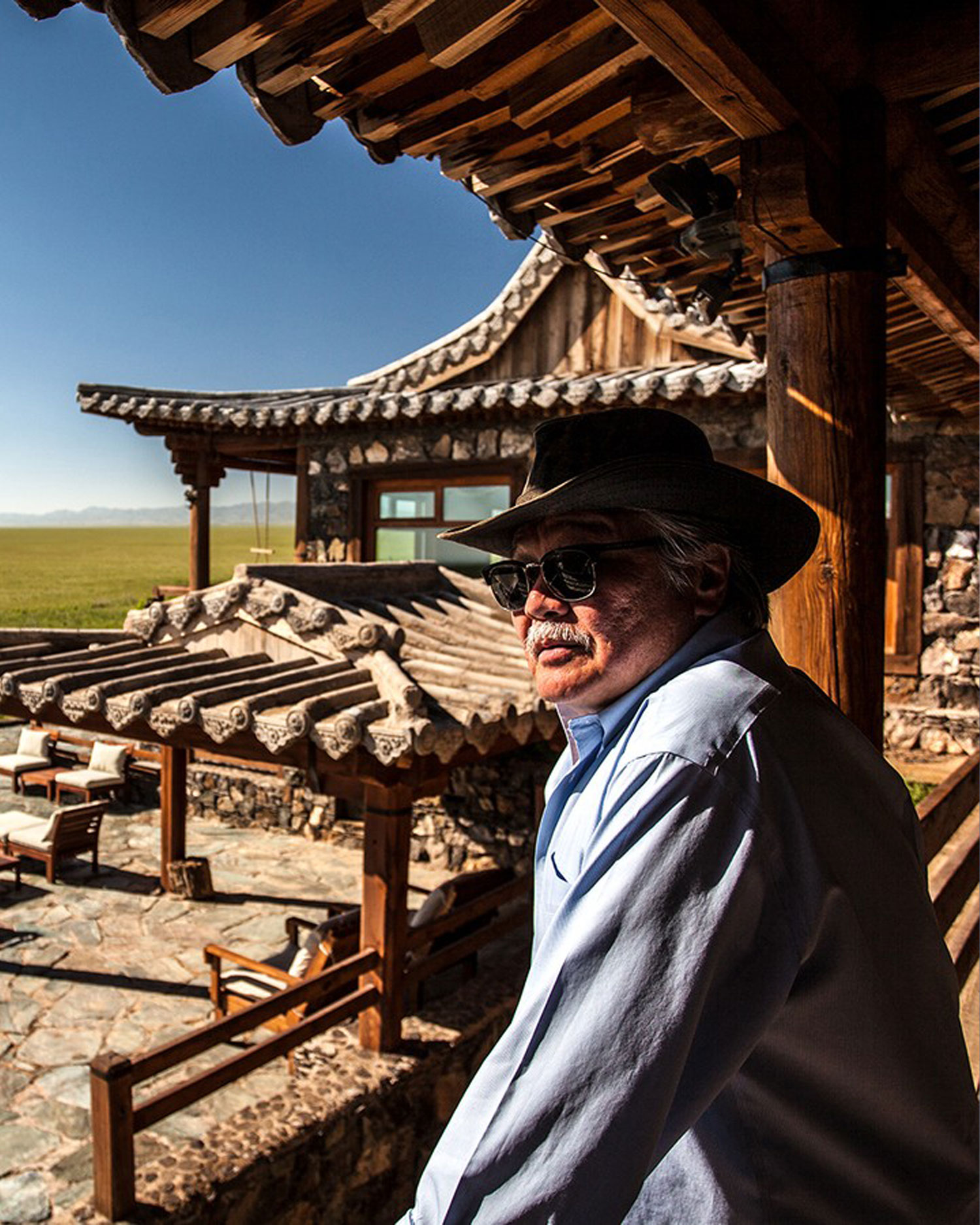

In Khankhongor, a small settlement in the South Gobi, the presence of an arts school has long offered something essential yet often fragile in rural communities: continuity. Music develops here through daily practice and close contact with those who carry the tradition forward. Development happens over time, guided by teachers and sustained through regular practice.
For more than a decade, Three Camel Lodge has worked alongside this local institution with a steady focus on access. Support has taken practical forms, covering tuition, enabling advancement beyond secondary school, and maintaining a connection between students and their home community while they study elsewhere.
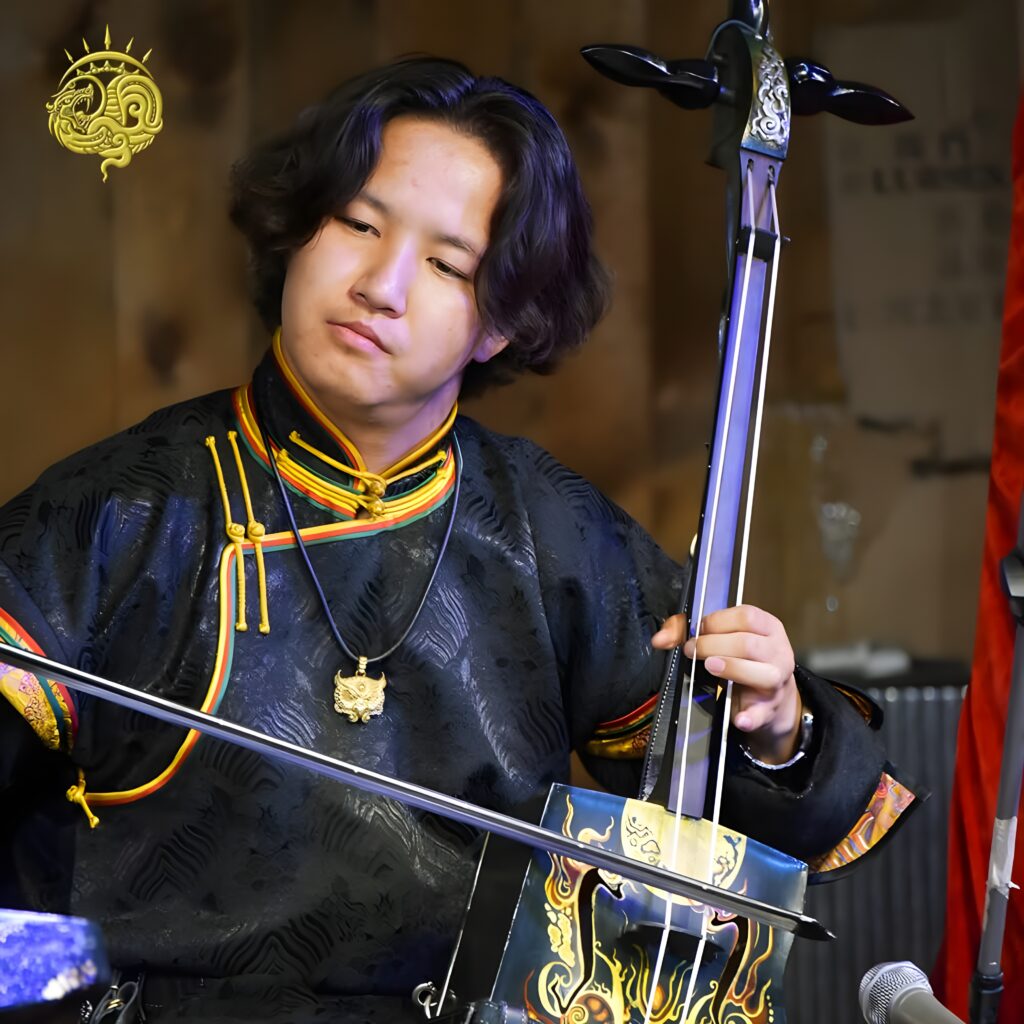
Over time, a number of students have continued beyond Khankhongor to pursue music more seriously. One of them is Uuganbayar, now the founder of the band Agmat.
Education as Infrastructure
Uuganbayar grew up in Khankhongor within reach of the arts school. Early exposure led to sustained interest, and that interest narrowed toward the Morin Khuur, an instrument that carries both technical demands and cultural weight. Continuing along that path required more than commitment. It required continuity in training and financial support over several years.
Through a cooperation program between Three Camel Lodge and the Khankhongor Arts School, he was able to pursue formal study at the Mongolian University of Arts and Culture, graduating in 2024. The structure around him made it possible to remain focused on the instrument without interruption.
Consistent support for training stabilizes a path that might otherwise narrow or disappear. In doing so, it allows knowledge to remain in circulation within the community from which it originates.
What Emerges Over Time
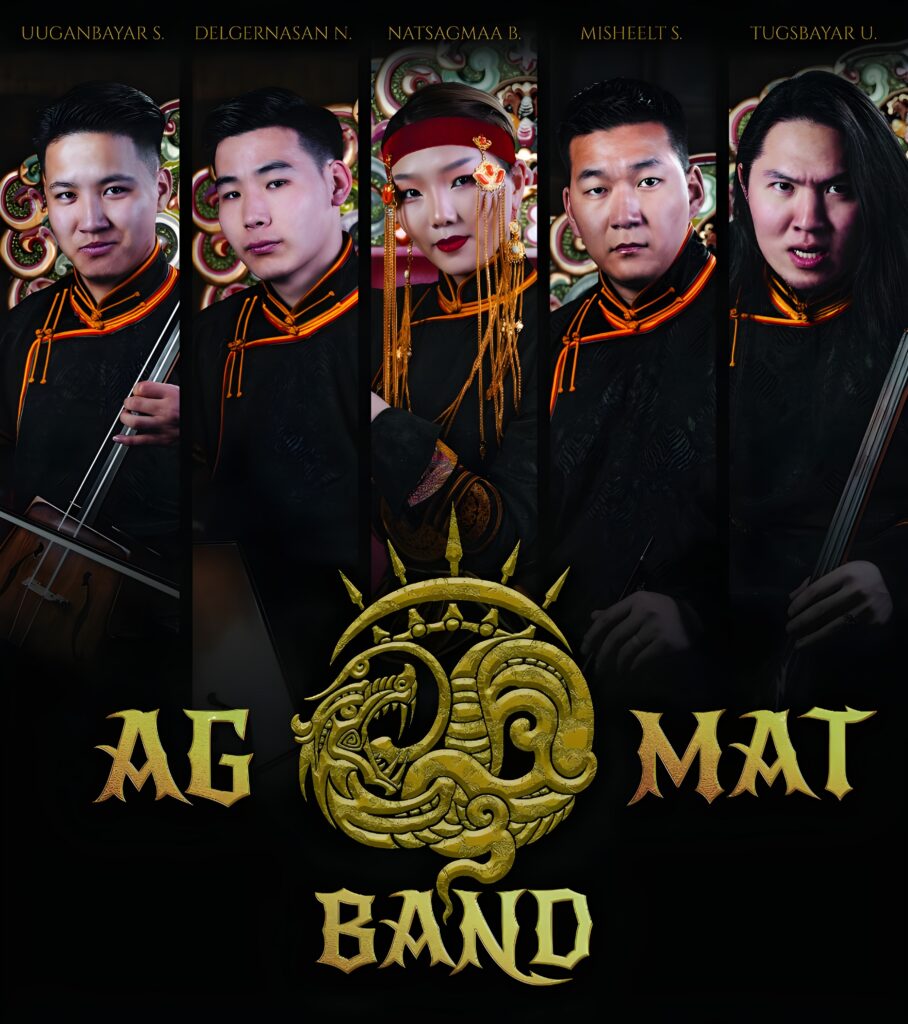
During his studies, Uuganbayar formed Agmat, a band grounded in traditional Mongolian music. The group developed while its members were still in training, refining their work in parallel with their education.
Invitations beyond Mongolia followed. Performances in Poland, Thailand, Vietnam, and South Korea introduced the band to audiences encountering this musical form for the first time. The reception reflected both technical precision and a clear sense of identity in the work itself.
The trajectory appears rapid when viewed from the outside. In practice, it rests on years of preparation that began in a local classroom and continued through sustained support.
Agmat now contributes to a wider field of musicians working within traditional forms while extending their reach beyond national borders.
A Platform in Context
At the Lodge, performances take place within a setting that remains closely tied to the surrounding community. Students from Khankhongor have, over the years, presented their work to travelers from across the world. These moments carry weight for reasons that are not immediately visible.
For many, it is an early experience of presenting their work to an unfamiliar audience. The setting allows them to do so without stepping outside their own context. The exchange remains grounded in place.
That continuity matters. It preserves a sense of authorship and avoids the separation that can occur when cultural expression is relocated too quickly or too completely.
Over time, these encounters accumulate. They shape confidence and provide a sense of direction, particularly for those considering whether to continue.
Sustainability, Observed Through People
Cultural sustainability sits at the center of this work. In the Gobi, traditions continue through practice, not preservation alone, and that continuity depends on whether younger generations have the means to carry them forward.
Supporting students in rural areas influences what remains viable within those communities. It creates conditions in which cultural knowledge continues to be practiced rather than set aside. It also allows individuals to pursue specialized training without severing ties to where they began.
At Three Camel Lodge, this approach is part of a broader commitment to linking community and conservation in practical ways. The intention is not to separate cultural and environmental efforts, but to recognize that both depend on continuity within the communities that sustain them.
Recognition in Its Proper Place
Agmat’s work now reaches audiences well beyond Mongolia. Their performances carry a level of discipline and clarity that stands independently of how they began. They are part of an evolving cultural landscape that continues to move outward while remaining anchored in tradition.
Their connection to Three Camel Lodge forms one part of that history. The larger story begins earlier and extends further, shaped by local education, sustained support, and individual commitment over time.
What remains most significant is not the visibility that follows, but the continuity that made it possible.