
Stargazing in Mongolia’s Gobi Desert: Beneath the Eternal Blue Sky at Three Camel Lodge

In many parts of the world, the night sky has slowly disappeared. Cities cast halos of artificial light across the horizon, constellations fade behind haze, and the Milky Way becomes something remembered rather than experienced.

The Gobi Desert remains one of the rare exceptions.

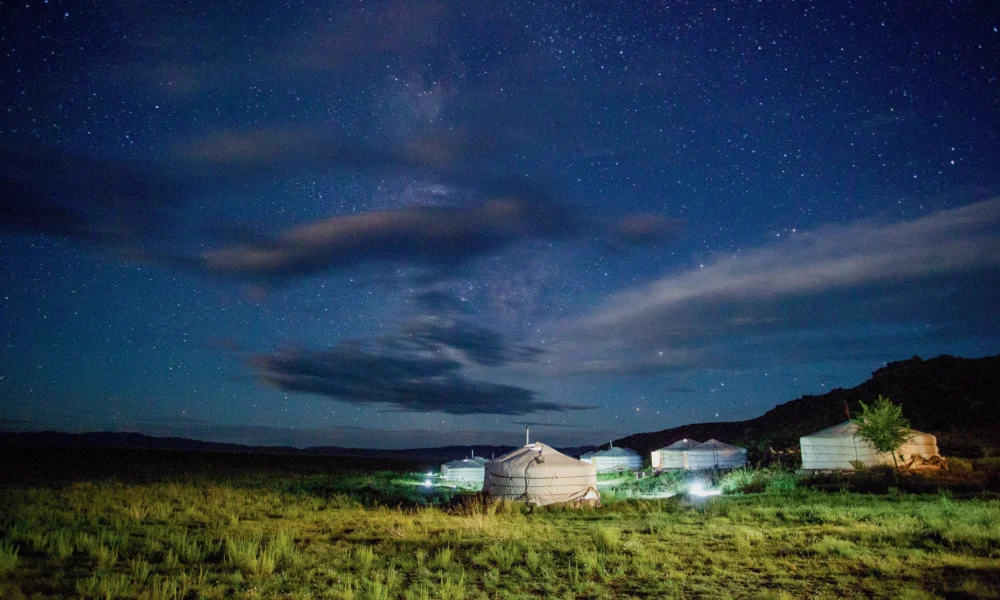
Far from urban centers and industrial corridors, Mongolia’s southern desert still offers skies of extraordinary clarity. At Three Camel Lodge, nights unfold beneath a canopy of stars so vivid that many travelers see the structure of the Milky Way clearly for the first time.

For centuries, nomadic herders have lived under these skies, navigating by stars, marking seasons through celestial movements, and weaving astronomy into spiritual and cultural life. Stargazing in the Gobi is an encounter with Mongolia’s relationship to the natural world.

Why the Gobi Desert Is One of the Best Places on Earth for Stargazing

Several environmental conditions combine to make the Gobi Desert exceptionally well suited for astronomy and night sky observation.


Minimal Light Pollution

The most important factor is simple: there is almost no artificial light.

The South Gobi contains vast stretches of open desert and steppe with few permanent settlements. Even nomadic households maintain minimal electrical use. Traditional ger camps operate with low-voltage solar systems designed for essential indoor lighting rather than outdoor illumination. When families retire for the evening, the landscape returns almost entirely to darkness.
At Three Camel Lodge, this sense of natural darkness remains deeply connected to place. The Lodge’s design draws from Mongolia’s traditional ger architecture, emphasizing low environmental impact and harmony with the surrounding desert environment.

High Elevation and Dry Desert Air

The Gobi’s elevation and exceptionally dry air create remarkably stable viewing conditions. Humidity is low, cloud cover is often limited, and airborne moisture that can blur celestial visibility is minimal.

Combined with Mongolia’s expansive horizons, these conditions create nights where stars appear unusually sharp and abundant.

A Cultural Respect for the Sky

Mongolian cosmology has long centered on Munkh Khukh Tenger, the Eternal Blue Sky, regarded not simply as atmosphere, but as a sacred living presence.

That reverence extends into the night. Artificially flooding the landscape with unnecessary light has historically felt culturally out of step with nomadic values, which emphasize balance with nature and attentiveness to environmental rhythms.

For generations, herders also understood the practical ecological consequences of excessive light. Natural darkness supports migratory birds, wildlife behavior, and livestock health across fragile desert ecosystems.

The Night Sky Through Mongolian Eyes

Long before modern astronomy, Mongolians interpreted the sky through stories rooted in movement, survival, and the rhythms of pastoral life.

Many of these traditions remain known today.

Altan Gadas: The Golden Peg

Polaris, the North Star, is known in Mongolia as Altan Gadas, meaning “The Golden Peg” or “Golden Spike.”

In nomadic cosmology, the heavens are imagined as a great rotating structure centered around this fixed celestial anchor. Much like horses tethered to a central stake on the steppe, the stars revolve around Altan Gadas through the night.

Doloon Burkhan: The Seven Gods

The Big Dipper is called Doloon Burkhan, or “The Seven Gods.”

Traditionally associated with blessing and protection, the constellation holds spiritual significance across Mongolia. It has long been customary to look toward the Big Dipper while offering silent prayers or symbolic milk blessings for good fortune and wellbeing.

Gurvan Maral Od: The Three Female Red Deer

Where Western astronomy identifies Orion’s Belt, Mongolian starlore sees Gurvan Maral Od, the Three Female Red Deer.

According to legend, Sirius becomes a celestial hunter pursuing the deer across the night sky on a white horse, an image that reflects Mongolia’s enduring relationship with horses, movement, and open landscapes.

Michid and the Nomadic Calendar

The Pleiades cluster, known as Michid, historically functioned as a seasonal calendar for herding communities.

Their disappearance and return in the night sky helped nomads anticipate seasonal migrations and prepare livestock for winter. A traditional saying advises:

“If you do not remember the date, look at the moon and the Pleiades.”

Hun Tavan Od and the Five Sacred Animals

Cassiopeia is known as Hun Tavan Od, the “Five Human Stars.”
The constellation’s five stars are associated with the Tavan Khoshuu Mal, Mongolia’s five sacred livestock animals: horses, camels, sheep, goats, and cattle. Rather than a myth of vanity or punishment, as in Western tradition, the constellation reflects ideas of community, continuity, and balance.
Together with Altan Gadas and Doloon Burkhan, these stars also served as a practical nighttime clock for nomadic herders traveling across the steppe.

Stargazing at Three Camel Lodge

At Three Camel Lodge, the experience of the night sky begins almost immediately after sunset.

As daylight fades behind the Gobi’s mountains and desert plains, the sky transitions into deep indigo before stars emerge in extraordinary density overhead. Guests often spend evenings outside the lodge’s traditional-style gers, wrapped in blankets beside the cool desert air, watching constellations rise across the horizon.

For many travelers, the experience becomes one of the defining memories of Mongolia. In a recent conversation, Three Camel Lodge restaurant manager Munkhzaya reflected on what surprises first-time visitors most about life in the Gobi:

“At night the Milky Way fills the sky with incredible brightness. With no light pollution, many guests see it clearly for the first time in their lives. It is an experience that leaves people with a lasting sense of wonder.”

The silence of the desert deepens that sense of scale. Without traffic, urban noise, or artificial illumination, the sky feels immediate and immersive in a way increasingly rare in modern travel.


Celestial Events to Watch in the Coming Years

Several major astronomical events will make Mongolia especially compelling for night sky travelers in the years ahead.

The Annual Perseid Meteor Shower, August 12–13, 2026

This year (2026) the Perseid Meteor Shower coincides almost perfectly with a new moon, creating exceptionally dark viewing conditions across the Gobi Desert.

With minimal moonlight interference, the desert skies surrounding Three Camel Lodge are expected to provide prime visibility for one of the year’s most celebrated meteor showers.

The Potential Perseid Meteor Storm of 2028

Astronomers are closely monitoring the possibility of a significant Perseid outburst in August 2028.

If Earth intersects a dense debris trail from the comet Swift-Tuttle at the right angle, meteor activity could increase dramatically, turning remote dark-sky destinations into sought-after viewing locations.

The Total Lunar Eclipse on December 31, 2028

A total lunar eclipse visible across Mongolia will coincide with New Year’s Eve 2028.

The event will transform the moon into a deep red “Blood Moon” above the winter steppe, creating one of the most memorable celestial experiences of the decade.


A Different Kind of Luxury

Luxury in the Gobi is often defined less by excess than by rarity.

Silence. Distance. Darkness. Time beneath an unobstructed sky. At Three Camel Lodge, stargazing is not packaged as spectacle. It emerges naturally from the environment itself, from the Lodge’s remote setting, its architectural restraint, and Mongolia’s enduring relationship with the natural world.

For travelers seeking meaningful encounters with landscape and culture, the night sky becomes more than scenery. It becomes a reminder of how humans once oriented themselves within the wider universe, not apart from nature, but beneath it.

A Continuum of Culture: Education, Music, and Community in the Gobi

In Khankhongor, a small settlement in the South Gobi, the presence of an arts school has long offered something essential yet often fragile in rural communities: continuity. Music develops here through daily practice and close contact with those who carry the tradition forward. Development happens over time, guided by teachers and sustained through regular practice.
Read more “A Continuum of Culture: Education, Music, and Community in the Gobi”
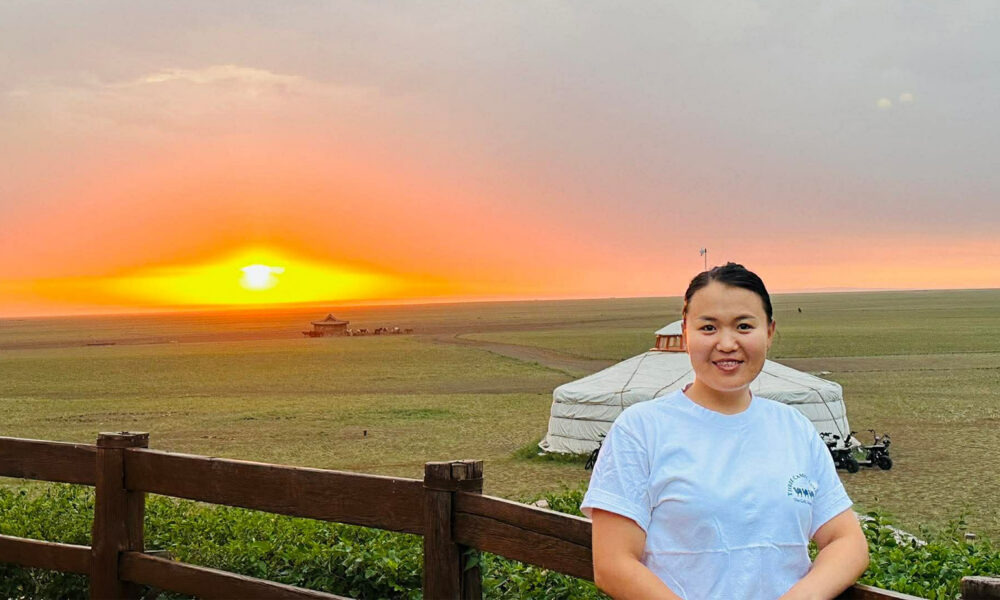
At the Heart of Hospitality: Munkhzaya of Three Camel Lodge

At the Heart of Hospitality: Munkhzaya of Three Camel Lodge

Set within the vast landscapes of the Gobi Desert, Three Camel Lodge is known for its cultural authenticity and deep respect for Mongolia’s living heritage. Yet what defines the experience most vividly are the people who welcome guests into this remarkable place. Among them is Munkhzaya, the Lodge’s restaurant manager, who has shaped the dining experience for nearly a decade. Read more “At the Heart of Hospitality: Munkhzaya of Three Camel Lodge”

Three Camel Lodge Dining 11

From Steppe to Stove: A Conversation with Three Camel Lodge’s Head Chef Munkhtsetseg

Set within the vast landscapes of the Gobi Desert, Three Camel Lodge offers more than a place to stay. It is an experience shaped by culture, environment, and the people who bring Mongolia’s traditions to life. Among them is Head Chef Munkhtsetseg, whose journey from the western steppe to the lodge kitchen reflects a deep connection between land, food, and heritage. Read more “From Steppe to Stove: A Conversation with Three Camel Lodge’s Head Chef Munkhtsetseg”

A Kalmyk Tibetan Family’s Trip to the Gobi

Living in New York City, I often find myself longing for something beyond the daily grind, the vast, open skies of Mongolia, herds of wild yaks and horses grazing freely, and the endless beauty of the steppe stretching before me. Beyond the landscape, I longed to be in a place that would immediately feel at home, as if returning to something I had always carried within me.  Read more “A Kalmyk Tibetan Family’s Trip to the Gobi”
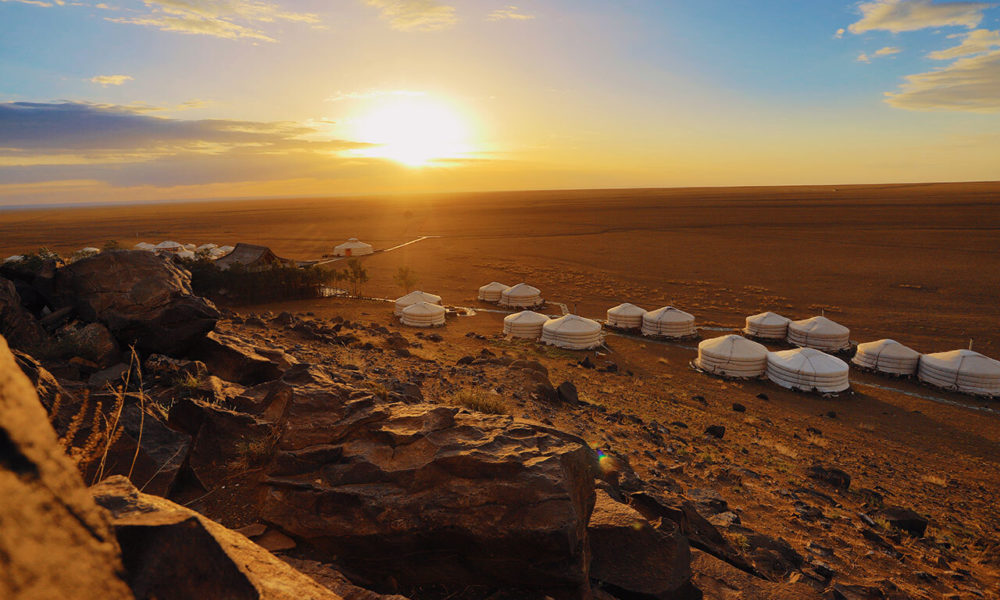
Three Camel Lodge Sustainability Q&A

Q&A with General Manager Buyantogtokh Munkbayar

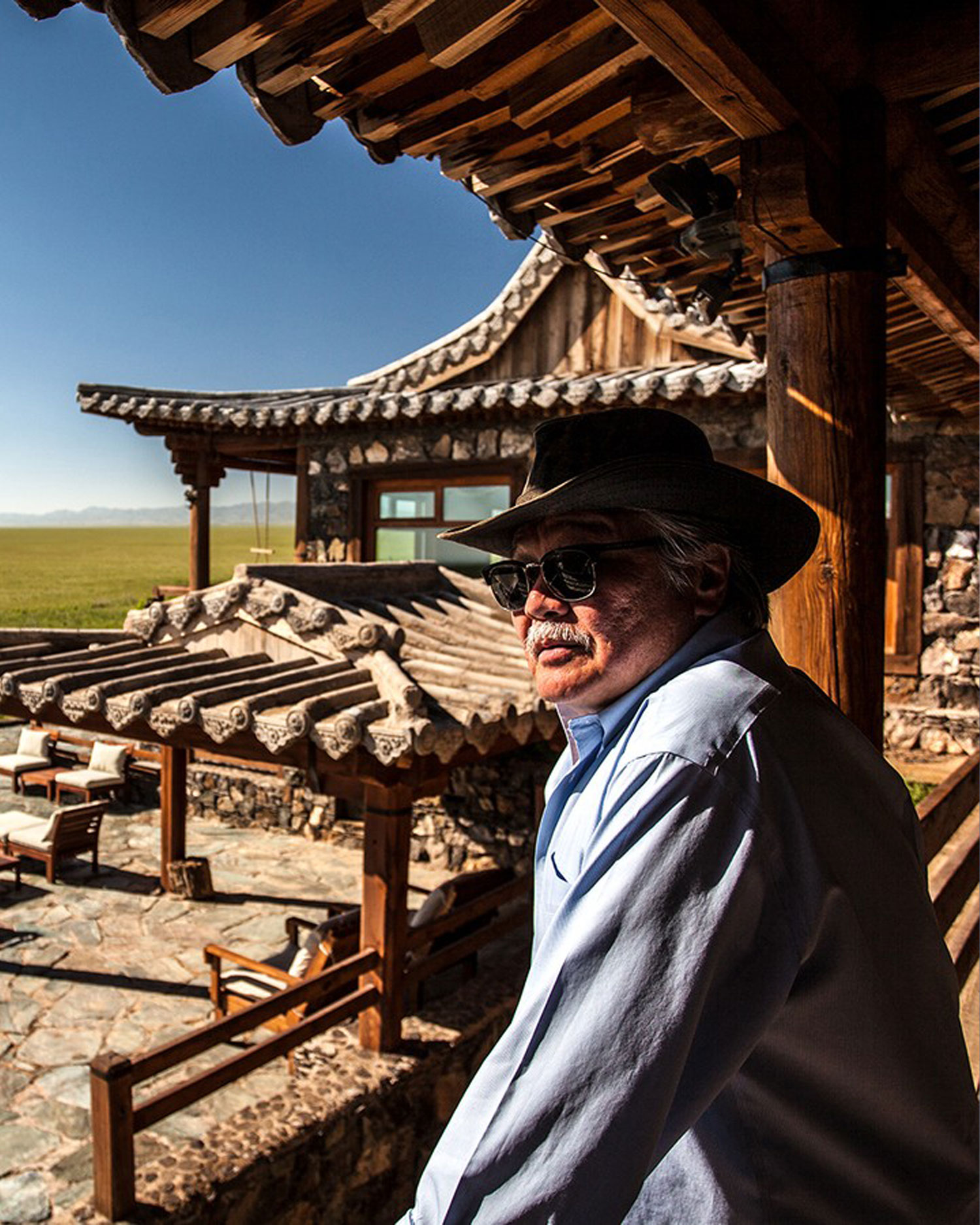
Buyantogtokh Munkhbayar, the General Manager of the Three Camel Lodge, shares the latest updates on our continued efforts to be a good host for our people, the planet, and our eco-travel guests who travel gently to visit our beautiful lodge in the heart of the Gobi Desert. As pioneers of sustainable travel and destinations, we strive year in and year out to further our mission, following three pillars of sustainable tourism. Three Camel Lodge has remained deeply integrated with our Gobi community, providing full-time employment, training, and promotion, while spearheading conservation initiatives protecting both our environment and our culture. Emerging from COVID, we now look forward to a return to travel this Summer as our country reopens for tourism.
Read more “Q&A with General Manager Buyantogtokh Munkbayar”

Stay Connected
to the Gobi

Get insider updates, stories,
and cultural highlights.

  • This field is for validation purposes and should be left unchanged.